Thursday, July 11, 2019

Murder & Mayhem: Exhibit A

(Post may contain affiliate links)

Hello!


Time for this week's Murder & Mayhem recommendation: Exhibit A, a Netflix true-crime documentary.


Exhibit A is an intriguing twist on true crime shows--it's kinda like the flip side of Forensics Files. Each episode examines a type of forensic evidence and, through a target case, questions to what degree we can really trust that evidence.


By now most people have heard of the CSI Effect: the expectation juries have that all cases should have conclusive scientific forensic evidence, particularly DNA. Failing that, the juries will refuse to convict. Exhibit A looks at the other side of this coin: the assumption that evidence is more conclusive than it really is.


No evidence, not even DNA, is a clear-cut slam-dunk; it all involves interpretation, statistical analysis, and human error. Recently hair and fiber analyses have come under attack, and before that, bite-mark analyses were cast into doubt. My particular pet peeve is this arena is "touch DNA." At first glimpse, touch DNA seems like a godsend for identifying perpetrators--all you need is a few skin cells. But it's far more complicated than it seems on the surface (I talk about this very briefly in The Dancing Girls).


Part of understanding what a DNA profile means is knowing where the sample came from, and what type of sample it is. For example, if you get a DNA profile from a victim's underwear, it makes a huge difference whether that DNA comes from semen, blood, or epithelial cells. If there's visible semen or blood on the underwear, you can be fairly certain the sample came from someone who was in the physical presence of the victim. But even that doesn't tell  you for certain you have your perpetrator. Say the victim had relations with her boyfriend before being attacked later in the day; in that case, assuming the semen came from a rapist would be a huge error.


The problem becomes more complex if we're looking at sweat or saliva, and far more complex when we move into epithelial cells (the source of touch DNA). For example, researchers testing new underwear directly out of their original packaging have found DNA profiles, most likely from the factory workers who made or packaged the underwear. So if a victim's underwear gives a DNA profile from epithelial cells, it's difficult (or impossible) to tell where that profile actually originated.
And that's just one issue among many with touch DNA. Exhibit A has an episode that goes into another potential problem with the tiny sample sizes touch DNA often involves.


Does that mean we can't trust touch DNA, or other types of evidence? Not at all. But we do need to understand what we can really take away from any source of evidence, and weight it accordingly when people's lives are at stake. Exhibit A puts these issues squarely out on the table for consideration.


Have you seen Exhibit A? What did you think?


Big hugs,
M. xoxo


Follow me all the places! 

Monday, July 8, 2019

Forensics fashion? Crime-fiction couture?

(Post may contain affiliate links) 

Hello!


You all know I'm a fan of all things crime friction and true crime. An evening spent watching Forensics Files followed by reading a thriller late into the night? Sign me up. But what you might not know about me is that I also love retro 50's and 40's inspired fashion. So you can imagine my pure, unadulterated joy when I discovered that these two things actually overlap in the real world...


I recently went to a 'curiosities' faire, which is like an arts & wine festival put on by creatures of the night. I was excited to go see what inspirations popped up for future stories, and just because I love that kind of stuff. There was quite a line to get in, but that was okay--because the line itself was an awakening. A large number of people were wearing 'dark' outfits--either literally or thematically. And a reasonable percentage of the ladies were wearing retro styles--but rather than the typical cherries, polka dots and gingham you'd find on those fashions, they were covered in skulls, spider webs, and implements of death.


I was like a child who'd never heard of princesses or fairytales walking into Disneyland for the first time.


The ultimate for me was a halter dress made from Edgar Allen Poe fabric based on The Raven. I instantly jumped on my phone and tried to hunt down the dress. I couldn't find it.


But I found the fabric.


Seriously, how cool is this?!


Growing up, I learned the basics of sewing. And only the basics--the last thing I wanted to do as a teenager was sacrifice any of my precious Agatha-Christie reading time to sew a garment I could buy for far cheaper at the mall. As an adult I've pulled out the sewing machine a few times, mostly to make Halloween costumes or alter a few ready-to-wear items. But I've never really been motivated to sew my own clothes.


Until I saw that fabric.


As I poked around the site, my eyes grew bigger and bigger. Skulls. Skeletons. Atmospheric brocades. Bloody handprints. Everything a crime-fiction obsessed author could ever want--and stuff I definitely can't get at the mall.


I bought the fabric and I found a close-enough pattern for a dress. But I'm not crazy enough to think I'd just bust out a perfectly fitted dress on the first try. So I bought a couple of other fabrics and patterns and set about refreshing my sewing memory with a large dose of help from the internet. The first couple of items I made were a regular, easy pencil skirt and top. But finally I took my first step into what I've come to think of as "crime-fiction couture"--a cute, fifties-inspired top covered in (subtle?) skulls:


Cute and Creepy!

I'm particularly proud of the buttons:


If you care about these sorts of things, the pattern I used is Simplicity S8882, and these are the buttons I used. The fabric is currently out of stock in red, but is available in slate and black. I cut one size too large, and had to fiddle with the fit, so the neckline isn't as cute as the pattern shape--but I'm thinking about making another one in the black, so maybe I'll get it right the next time.


I realize I'm one of only a handful of people on the planet who'd wear this shirt--and that's when I think sewing is very cool, when you're creating something you just can't find anywhere else. And I have to admit, I really love the idea of crime-fiction couture...What about you? Do you think it's fun, or just silly? If you could make your own themed wardrobe, what theme what you pick?


Stay tuned for the 'Nevermore' dress...I'm not sure how long it'll take or how it'll come out, but I'm gonna make it happen!


Hugs,
M.

Follow me all the places! 

Monday, July 1, 2019

Introducing my new Murder & Mayhem feature...

(Post contains Amazon Affiliate links)

Hello!

So, I've been doing a little something on my Facebook page and Twitter that I've been calling M.M.'s Mayhem & Murder feature, and decided it was time to bring it over here to the blog, too.


The idea is this: I love true crime and fictional crime, and a whole range of odd things that touch onto one or both of those areas. Not surprising considering I write crime fiction, I know! But I figured since I'm constantly on the lookout for new things to read and watch and learn about, I might as well share my finds with you.


So, first a recap of the features so far, to catch the blog up:


Week one: I kicked things off with one of the most bizarre (in my opinion) true-crime cases of all times, Anatoly Moskvin. This guy didn't kill anybody, but...let's just say he had philosophical issues with burying young women.


Week two: I recommended one of my favorite true-crime podcasts, Wine And Crime, which mixes true-crime cases with a healthy dose of humor. Three life-long friends work their way through three bottles of wine while discussing a true-crime topic. Fascinating and funny, and I love it.


Week three: I recommended Working Stiff, by Judy Melinek and TJ Mitchell. This is an excellent look at how Medical examiners help determine questionable causes of death, among other things. I found this just fascinating! 


Which brings us to my current recommendation: Since people seemed to respond to Working Stiff, I thought I'd recommend Autopsy: Confessions of a Medical Examiner, a series of HBO documentaries about how autopsy evidence has helped solve cases. This is an oldie (especially the earlier episodes), but definitely a goodie. HBO appears to have released one episode per year for twelve years, and each goes into around 6-10 cases per episode, so each is brief and packs a punch. About half the episodes are available on Amazon, free if you're a Prime member, and you can find most of them on YouTube, too. 


Have you read/watched/listened to any of these? What do you think? Do you know of any related media I should check out?


Thanks for dropping by!

M.M.


Tuesday, January 1, 2019

Post to claim this to Bloglovin' :)

Follow my blog with Bloglovin Just a quick post so I can claim this blog on Bloglovin! :)

Thursday, February 9, 2017

Guest Post: I am a Dreamer: Gearing up to Self-Publish

Hello everyone!

I'm doing something a little different today, sharing a post by another writer, one I know and admire: D.K. Dailey. Many are the times she's been a cheerleader in my corner, making sure I'm never tempted to give up my dreams of being a writer--so I thought I'd share a little of that cheerleading with you. :)

M. xoxoxox

---------------------------------------------------------------------------------


I Am a Dreamer: Gearing up to Self-Publish


Being a writer is the essence of being a dreamer. Writers have superpowers and the license, after growing up, to imagine the impossible without being called crazy. We see imaginary people and make up lives and worlds for them to live in. Our made-up stories, people, things, connections, events and worlds continue to entertain long after the book is closed, the e-reader is shut down, or the audio-file narrator speaks the last word. Readers revisit our worlds and characters time and time again. In this way, the power of words is astronomical. Writing is a power we wield, one that keeps us up at night and keeps ideas running through our heads.

When I look over all the characteristics writers need in their toolbox in order to navigate the world of writing, it starts reading like a magical potion for a person with an indestructible spirit. I imagine that if being a writer was summarized as a series of bumper stickers, they would say:

Never stop. Never give up. Passion moves mountains.
Believe in yourself first or no one else will believe in you.
Wear your armor, you're gonna need it.
Must be imaginative and a little crazy.

Now when that dreamer starts down the path to taking writing more seriously and starts striving to be a published author they are met with rejections and ups and downs. We get our feelings hurt and grow thick skin because being critiqued causes us to doubt ourselves and our work. The road is full of learning and humbling experiences. No shortcuts or secrets exist, especially if reaching an audience and being taken seriously is the goal. Although there aren't any secrets to it, there are tips and facts I wish I would've known about the industry that I've stumbled on or found out the hard way. But that's another blog post.

I have always loved writing and reading but never thought until 2009 that I could become a writer or ever call myself a published author. And then I took a class on the art of writing a dramatic play. During those months, I became engrossed in my plot and characters and although I had a career I loved in advertising, I realized I needed to write to feel fully fulfilled. Now if I could only find a career that merges my love for advertising and writing, I’d be a happy woman!

Flash forward to 2017 and thirteen books and counting later, here I am still without an agent or publisher. I assure you, it's not for lack of trying. To date, I've sent out nearly two-hundred queries to agents and publishers. I've had one revise-and-resubmit request from an agent, several partial manuscript requests and seven full manuscript requests. I've participated in at least six Twitter pitch parties which place authors in front of industry people who favorite our pitches, inviting us to send them a query. I have also won two writing contests and placed in six others. Officially, I'm a seasoned amateur writer and professional dreamer.

Since I have written many books without publishing, I have a unique vantage point on the adage “Just Keep Writing,” that a lot of writers have given as advice. And it reminds me of Dori's words, “Just Keep Swimming,” in the movie Finding Nemo. I have learned that most people don't sell or publish their first books. And if they do it's many drafts later. One very successful author I met said it was draft twenty that was published of her first book and it was only halfway through at draft ten when she felt she knew her characters and the fantasy world they inhabited. In general, it takes the process and experience of writing several books to feel grounded enough to venture out of our writer (hobbit) holes to pursue our dream.

And even when we venture out and experience the world as a writer, growing thick skins and filling our toolbox with tools of our craft, we still stumble, we fall and we fail. But hopefully we get up and learn and grow. We carry the dreamer mentality with us, but reality sets in.

From my experience in the writing world, I, the dreamer, have to face reality. As far as my advertising career is concerned, I’d love to hold a job with a mission where I can learn and grow. For my writing career, I’d like to be a hybrid author because I’d like to publish traditionally, with a small press and I’d like to self-publish. Over time, I have come to realize that I might have to switch up the order of how I’d like to be published.

With this in mind, I still querying, but am also gearing up to self-publish. Here are the steps I have taken to make this dream a reality:

1. Plan a full series of books
2. Write books
3. Find and work with beta and critique groups to improve books
4. Hire and work with editors
5. Create a marketing plan and execute it.

Although I'm still writing and editing I am now only one book away from writing the last book in the series. And now that I see the end in sight, I'm saving money to make it happen. In the end, I will not sell my books short, I will invest everything I can in them. Choosing to self-publish doesn't mean I skimp on quality.

So from one dreamer to the next, keep writing and keep pushing forward despite rejections and setbacks because everyone has their own path. This business is subjective and no path is the “right” one. Figure out what your goals are and go forth, step out of your writer hole and share your worlds.

-----------------------------------------------------------------------------


You can find more from D.K. Dailey on her website, and on Twitter. :)

Sunday, January 17, 2016

Best books I discovered in 2015

(All purchased by me; Affiliate links)

Strange things are afoot at the Circle-K...

I’ve been a bit busy lately, and my blog has suffered—the most relevant reason is that I was contacted by an indie publisher interested in publishing one of my books, and I’ve been researching like crazy to see if we’re the right fit. Exciting, and I'll keep you posted!

Before time got away from me, I intended to put together a year-end post about a few of the books I read and enjoyed last year…So today we're gonna jump into the not-so-way-back machine and travel to the last week of 2015 to enjoy a year-end review of my favorite literary-type discoveries!


Let's start with some serious stuff...


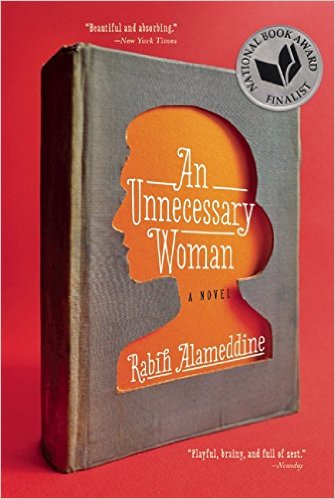
An Unnecessary Woman, by Rabih Alameddine

Summary: Aaliya Sobhi has spent her life set to the side by circumstance and culture, unwanted, unnoticed, and for the most part, unloved. She navigates war-torn Beirut and the loss of almost everything that matters to her with stolid doggedness; her life force comes always through books: selling them, reading them, and translating them. As she approaches the nadir of her life, an unexpected tragedy threatens to take the painstaking translations she's spent her life shaping, and she has to learn a new form of acceptance to save them.     

Why I love it: Aaliya's story could easily be a depressing indictment or veer off into cheesy redemption, but Alameddine manages to make it nuanced, engaging, and relatable. She explores the complexities of Lebanese culture and the disparities of gender while eschewing stereotypes and easy explanations. Aaliya shouldn't be likeable, but she is; she touched the part of me that knows what it's like to be marginalized and is afraid of finding myself alone. The ending is powerful in an understated way, and Aaliya has stayed with me for months.     


Middlesex, by Jeffrey Eugenides

Summary: Middlesex follows the story of Calliope Stephanides, beginning two generations before she's born. Cal is a hermaprodite, her biological reality the fluke result of her Greek grandparents' incestuous marriage; their complicated love story and the consequences of their choices interweave with Cal's discovery of her body and the development of her gender identity. 

Why I love it: As a developmental psychologist and amateur family genealogist, the story of how a family's complicated history culminates in the identity of one modern-day protagonist pulled me in from page one (not a surprise--my first novel, Hazel-Green, is a family saga with similar themes). Eugenides celebrates taboo topics rather than 'deals' with them--he explores without judgement and as a result allows the reader to engage fully with important questions of nature, nurture, and the human spirit. 


And now for something completely different...


Soulless, by Gail Carriger

Summary: Alexia Tarabotti has no soul--and that's a good thing. At least, it is when you live in a world populated by werewolves and vampires, because it means you can neutralize their powers with a touch of your hand. Of course, that ability makes Alexia dangerous to many and useful to others, and within pages she's being hunted by those who want to destroy her and those who want to employ her. Add to that her hidden (even from herself) passionate love for one of the most powerful werewolves around and you have a fun, fast-paced steampunk romp with a fair amount of suggestive situations and even some steamy sex.

Why I love it: Steampunk. Strong female protagonist. Steamy situations. Isn't that enough? Oh, fine--Carriger's writing is also witty, her dialogue engaging, and her world-building strangely believable, given the content revolves around werewolves and vampires. This book is a good time, plain and simple. Grab some tea and biscuits, cuddle up in a cozy throw on the couch, and enjoy the ride.


Etiquette & Espionage, by Gail Carriger

Summary: Sophronia Temminnick is a spirited fourteen-year-old tomboy who doesn't fit the Victorian template for what a young lady should be. When her mother reaches the end of her rope, she sends Sophronia off to a finishing school; but as it turns out, while this school is about 'finishing' young ladies for their introduction to society, it's also about teaching them to 'finish' off anyone who poses a threat to that society. They learn how to dance, and how to use weapons; how to flirt, and how to deceive; how to be beautiful, and how to be lethal.

Why I love it: Steampunk. Strong female protagonist. But-- appropriate for teen readers. Sophronia deals with the politics of young girls and young love (ish) while learning how to climb airships, care for mechanical pets, master martial arts, and faint without wrinkling her frock. I wish I'd had this book when I was a teenager, and I'm not too proud to love it now. The world Carriger builds is full of fun surprises, and Sophronia is an empowered young woman you'll want to spend lots of afternoons with. 


There you have it! Hope you saw something that intrigued you. I'd also love to hear about which books you loved last year--tell me about them in the comments. 

Happy reading!
M.

Sunday, December 13, 2015

What I Learned this NaNoWriMo: Death of a Pantser


I participated in NaNoWriMo last month, for the fourth time; as you can see from the widget in my sidebar, I ‘won’—I hit 50,000 words on November 16th. I purposefully tried to finish ahead of schedule because I had my own personal goal of 75,000 words for the month, and I knew the second half of November was going to be a bear; I made it to 75,002 words on the evening of November 30th. Huzzah!


Since then I’ve worked on it in between coughing fits and bursts of unconsciousness (I promptly got sick shortly after NaNo ended); I have two scenes left to write, and then my first draft of Accidental Revelation, the second book in my tarot mystery series, will be done. Huzzah again!


So NaNoWriMo was a success for me in terms of output, for sure. But, I’ve come to look forward to NaNoWriMo as a conduit for learning about my writing process as well. And this year I learned that I’m not quite the pantser I thought I was. Or maybe, at all.


I’ve never been 100% pantser—I’ve always had some basic structure in mind with every novel I’ve written, even if it was just knowing the premise, the conflict, and how the book would end. Last year during NaNo I took a completely new idea and self-scaffolded it as I went along; I used a blend of discovery writing mixed with pauses to reconceptualize and insert blank scenes into Scrivener where I knew I would need them (I’ve previously described this process as ‘Pl-antsing’, here). 


This year, I went into NaNoWriMo as an accidental plotter. I came up with the idea for the book back in June, and put it into my queue of goals as the manuscript I’d write during NaNo. I went on an overnight trip to the location that inspired my setting, partly as research for the first book, and partly to gather ideas for the second. As time passed, I continued to be excited about the book and so did a few brainstorming sessions to come up with ideas about how the plot would unfold; I created a Scrivener project so I could write down research information and create blank scenes for the plot points I would need. There were only a few at first, and they had only basic titles with nothing written—I’m talking stuff like ’Murder occurs’, ‘Semarra investigates clue’, and ‘Murderer comes after X’. As ideas percolated out of my brain, I added to the scenes, and by the time NaNoWriMo rolled around, I had four major divisions in the book with several important plot points in each one. 


Without realizing it, I’d created a basic outline for my novel. Before I’d ever written a word. Whaaa??


During each of my three previous NaNos, I had difficult days where I hated what I was writing, or was at a loss for what to write next. I was ready for that to happen again this time when I started on November 1st. I started at the beginning (I hear that’s a very good place to start), and it felt good to sink my teeth in. Then I switched to the end, and wrote out the scene where my protagonist explains who the murderer is and why the murder occurred; that helped me work out the remaining questions I had in my head about everything. And then I wrote the rest of the novel, jumping around where inspiration took me, adding scenes as needed. And those days where I hated what I was writing and had no idea what to write next never came.


Yes, there were days where I knew what I was writing wasn’t my best work, and would need to be heavily revised. But I knew where it was going, and I knew what section I was excited to work on next. And the next thing I knew, I had 75,000 words in the bag.


I was surprised to find that the magic of discovery writing still showed up, in spades. While writing a scene for my intended purpose, an additional possibility would rear its head, and poof, I had a deeper, richer story. I never knew what I’d stumble onto with each new writing session; every bit of the fun was still there, with the security of having an overall plan.  


So, it’s official. I’ve been pulled over to the plotting side. Who knows, for my next novel, I might even write out a full, complete outline…


*GASP*

Happy Writing,
M.