Showing posts with label publication. Show all posts

Sunday, March 29, 2015

My first Pitch-O-Rama!

pitch-o-ramaThis weekend I took another step in my development as a writer—I participated in my first Pitch-O-Rama: two hour-long sessions of speed-dating for agents and writers.

And I was terrified.

I’ve learned how to write query letters, various lengths of synopses, and even 140-character twitter pitches. But to sit down in front of an agent with only a few minutes to convince them to take a look at my manuscript? I had no idea where to begin.


Luckily for me, the day started out with a mentoring session; I was in Betsy Graziani Fasbinder’s group, and she was amazing. She had each author in her group give their pitch, and then gave them pointers on how to efficiently and effectively communicate what was important about their particular project. She has a gift for quickly evaluating and re-tuning that makes you feel supported and empowered in a few minutes; I left our session feeling far more confident that I would be able to maximize the day's opportunities.


She also gave us some excellent general advice:

    My terror before the mentoring...
  • Take a moment to connect with the agent, even if just to ask how they are today. Don’t instantly jump into the pitch.
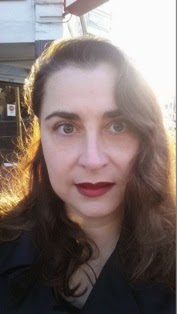
  • If the agent seems to desperately need a moment to drink some water, catch their breath, etc., give it to them. Basic human decency is highly underrated, and highly appreciated. 

  • Don’t read from notes, or memorize a spiel. Nobody likes that monotone and lack of connection that comes from reading/memorizing, and agents hate this. Know what you want to communicate, but have an authentic conversation. 

  • Don’t give a plot synopsis. Communicate the essence of your project—genre, audience, core idea, why you're the right person to write it, and why it will sell.

  • You’re looking for a match, not a sale. This was a huge revelation for me. You have a specific product to sell. They have a specific market they’re trying to buy for. The question is, is there a fit between you? It’s not personal if there isn’t, and it’s not about saying what they want to hear. You want to find the agent that can represent your book well, not trick an agent into looking at something that isn’t right for them.

  • Open your body up and breathe.  Betsy explained that when you’re tense and sitting with your arms all crossed or pulled into yourself, you constrict your chest and breathe less easily, and all this makes it more likely you’ll get those shaky hands and knees. That makes you feel even more nervous, and makes you look nervous, too.

Not only did I find these events intimidating before today, I wasn’t sure how useful they were, regardless. I’m a complete convert. The truth is, agents know very quickly if they want your project or not, and this is a great way to sort through potential agents to find one who will actually be interested in your query. It’s also a great way for authors to get a feel for who the agent is as an individual; hours of research on the web can’t tell you if there is something about the person you will/won’t connect with—maybe you’ve heard an agent can be brusque and off-putting, but when you speak to her in person, you realize she just likes to cut to the chase. And for me, the event helped me hone my ability to think and talk about my project in ways that will transfer to other situations.


If you’ve never gone to one of these events, I encourage you to do so. And to help you with your first time, here’s some specific advice based on my experience:

    They're just people like anyone else...
  • Research the agents before you go. Determine which agents are the best potential matches for your project, and rank order them. Learn about who they are, not just what their wish-list is. At my event, if there were more than 10 people in line, I knew I wouldn’t get to see that agent, and I only had seconds to pick the next line before it filled up. Thank goodness I knew exactly who I wanted to see, and why.

  • If there are opportunities to work with mentors, take them. Even if you think you’re pitch-perfect. A lot of what I thought would have been right turned out to be wrong--like giving any plot synopsis.

  • If all the agents you want are booked for that session, talk to someone else, anyway. I spotted an agent who didn’t have anyone in her line, and asked if I could practice my pitch on her and see if she possibly knew anyone that might be interested in it. She was welcoming and helpful.

  • Put your focus on honing your ability to pitch and navigate the event, not on how many agents request a query; you’re learning an important skill. Soak up everything you can, including any feedback about your project, your pitch, or the market. Ask questions about the current market if you have a chance. This way you’ll walk away with value even if you get no invitations to query; and, ironically, when you take the pressure off of yourself you'll perform better anyway. 

  • Talk to other authors in line while you wait. Practice your pitch, and let them practice theirs. Listen. You never know when the person in line with you knows someone or something that can help you, or when you’ll know someone or something that can help someone else. An author in line behind me had a problem I knew the answer to, and it felt good to help someone else. 


So how did my day go? I learned a lot, and feel more confident in my ability to pitch my work. I also feel like I have another skill in my author tool-kit now. 

Oh, and got three invitations to query. Guess what I've been working on today? :)

Happy Writing!
M.

Wednesday, March 25, 2015

My short essay, Impossibly Tiny, has been published!

Hello!

Just a short note today because I'm excited to announce that my short essay (just under 800 words) has been published! It's called Impossibly Tiny, and it's the true story of a sick kitten I found and raced to save; he taught me an important life lesson I really needed at that point in my life.

If you'd like to read it, you can find it by clicking here, published in Elephant Journal. And here's a teaser shot of the kitten:

Little Neo about a week and a half after I found him. :)

Happy Reading!
M.

Monday, February 9, 2015

Do five things every day to move your writing forward

Today I thought I'd share with you one of the best pieces of writing advice I've ever read, and why I think it works. I found it about a year ago in one of Lawrence Block's books about writing; there are several, all useful, but this one snippet has been the most helpful thing I've found in them: Do five things every day to move your writing forward.


Five is alive! (Source)
What five things? Well, that's up to you. But do five things, every day, no matter how big or small.


One of those things should be writing, of course. We all know we should write every day. Another of those things should probably also be reading: how lucky are we that we're in a profession that forces us to read prolifically! Twist my arm, why don'tcha?


But the others are more flexible. Make a new connection on twitter. Read an article about writing on your favorite blog. Spend half an hour researching agents. Look for relevant pins to add to your character board on Pinterest. Have lunch with a fellow writer, to get those creative juices flowing. And so on, and so on.


Wow. Those are some awesome snacks.
They should be different things, of course. Don't write five pages of your book and declare yourself done. Don't friend five new people on twitter and go have a snack. Each of these count as one thing.


The things you do will differ depending on where you are currently--if you already have an agent, researching agents doesn't make sense. If you've just had a book published, several of these things will probably involve book promotion. Just make sure to do five, every day.

Why is this so important?

Speaking for myself, I'm the sort of person who would happily crawl into a little cozy writing cave for six months and have no contact with the human race. My significant other would throw me scraps of food and come in for a cuddle now and then, but that would be it and I'd be happy as dust on a tchotchke.

 I heard you were dead...(Source)
And when I came out of my cave, I'd have lost half of my social media contacts because everyone would have thought I'd gone all Snake Plissken. I'd have missed a ton of new books and interesting articles, which I'd be too overwhelmed to catch up on after the fact. And any interesting prompts or discussions that might have made my writing better would never have crossed my path.


I've heard of tiny living, but this is ridiculous...
I would have also lost valuable time trying to get my other projects out into the world. It takes time to get things submitted, find an agent, get a book/article/story published; we all know this. You don't just finish a piece, say 'Woohoo!', and flick the 'publish now' switch. While you're sending out those letters and working through the rejections to get to the acceptances, you should be writing your next book/article/story. These things take far too much time to do in a fully linear, non-overlapping way. At least if you want to be successful and have enough money to pay the rent.


I would have also lost valuable time building my platform, something that's becoming increasingly important for aspiring writers. Blog readers and Twitter followers don't develop over night, and they don't take kindly to being neglected for long. At least the ones that involve actual people that you actually want to connect with. Just like a plant, you can't water them only once every six months and expect them to grow.


(Source)
And maybe most important of all, while I was in that cave writing, the part of my brain that thinks about all this stuff gently in the background while I work would have had no input. Yep, it's true, the brain works on problems and processes information even when we're not thinking about it. Things we've read, seen, and done recently 'prime'  concepts and knowledge in our minds, keeping it all activated and ready for use when it's needed. So when we do a variety of tasks over time, we keep our minds efficiently processing whatever particular task we're focusing on at the moment.


So try it out. Sometimes I'm not as good as other times at remembering to do all five--sometimes I only do a few, and sometimes I crap out altogether. So I've created a simple spreadsheet to jot down which things I did each day--this lets me know if I'm slacking off too much for too long, and reminds me to revisit things that I haven't touched for a while. You know how it is--'Gee, it seems like only a week since I compiled that list of prospective agents, but it's been a month! I better follow up on that.'


Thank you, Lawrence Block, for the amazing advice. So far, it has served me well, and I have every confidence it will continue to do so. Now where's my next installment of Matthew Scudder??


Happy writing,
M.

Monday, October 13, 2014

Zombie Flash Fiction Published!

I am so excited, October must be my lucky month! I just found out that the zombie flash fiction piece I wrote has been published on Every Writer!

You can read the piece by clicking here or on the picture below; because it's a flash fiction piece it's very short, only takes a couple of minutes to read (Warning: this piece does have some gore in it, so take a pass if that's not your thing). If you take a look, let me know what you think!

(Photo credit: Vorspiel by Ann Dunn)

Happy Halloween everybody--watch out for those zombies!! :)

M.

Wednesday, October 1, 2014

The One That Got Away: My piece has been officially published!!

Guess what?!?!

My flash-fiction piece has now been officially published! It's a fast read, no more than a minute or two, if you want to check it out.


You can find it by clicking here:


Thank you so much for checking it out if you get a chance!