Showing posts with label Book review. Show all posts

Friday, March 27, 2020

Murder & Mayhem Recommendation: First Cut by Judy Melinek & T.J. Mitchell

(Post contains affiliate links, only for products I have read/tried)


Hello!


I hope you're doing well and staying healthy during these crazy times! Because so many of us find ourselves sheltering in place right now, I thought I'd try to step up my recommendations a little to spread the word about some murder-&-mayhem-related awesomeness that I'm enjoying lately.


Today I'm gonna talk about First Cut, by Judy Melinek & T.J. Mitchell:


What made me want to read this: A while back, I recommended Working Stiff by these same authors; Working Stiff is a non-fiction memoir about Dr. Melinek's work as a medical examiner, and covers, among other things, her work in NYC in the days after 9/11. I found that book to be a fascinating, approachable read that I couldn't put down, so when I found out the authors were trying their hand at fiction, I had to read it. Because, in a nutshell, First Cut is a novel about a fictional medical examiner who helps solve crimes, written by a real-life medical examiner who helps solve crimes, writing together with her husband.


Plot basics: Jessie Teska, a medical examiner, moves to San Francisco to escape a painful past. She's barely into her new digs when a very odd case crosses her path: a man shot to death because he snatch-and-grabbed a laptop in a cafe. As she look into the case, a woman she caught crying in the rain turns up on her table, dead of a drug overdose. As she investigates, she begins to suspect the cases are related; when she tries to pursue her line of inquiry, she smashes up against bureaucratic resistance that undercuts her ability to do her job and puts her in danger.


Why I love this: Because one of the two authors is a medical examiner, this book is as authentic as it gets, but is an easy, compelling read. The insight into what medical examiners do and how vital it can be is fascinating, but in the wrong hands could become dense and dry--but the writing here is fresh, inviting and down-to-earth. I also love Jessie Teska as a character; she's tenacious, she's empathetic, she's a little bit grumpy, and she's a lot real. She's the sort of person I'd love to hang out with (at least, after she washes the smell of decomposing corpses off of her). And, because I'm a Bay Area resident, I love that the book is set in San Francisco and manages to celebrate the city I love even if Jessie's not yet sure it's her cup of tea. She lives in a converted cable car, a detail taken from real San Francisco history--how cool is that?


You can find First Cut in bookstores now, and of course you can find it on Amazon if you prefer to order that way.


I purchased First Cut myself, and this review reflects my honest opinion of the book.


Happy reading!

M.M.


Follow me all the places! 

Monday, July 1, 2019

Introducing my new Murder & Mayhem feature...

(Post contains Amazon Affiliate links)

Hello!

So, I've been doing a little something on my Facebook page and Twitter that I've been calling M.M.'s Mayhem & Murder feature, and decided it was time to bring it over here to the blog, too.


The idea is this: I love true crime and fictional crime, and a whole range of odd things that touch onto one or both of those areas. Not surprising considering I write crime fiction, I know! But I figured since I'm constantly on the lookout for new things to read and watch and learn about, I might as well share my finds with you.


So, first a recap of the features so far, to catch the blog up:


Week one: I kicked things off with one of the most bizarre (in my opinion) true-crime cases of all times, Anatoly Moskvin. This guy didn't kill anybody, but...let's just say he had philosophical issues with burying young women.


Week two: I recommended one of my favorite true-crime podcasts, Wine And Crime, which mixes true-crime cases with a healthy dose of humor. Three life-long friends work their way through three bottles of wine while discussing a true-crime topic. Fascinating and funny, and I love it.


Week three: I recommended Working Stiff, by Judy Melinek and TJ Mitchell. This is an excellent look at how Medical examiners help determine questionable causes of death, among other things. I found this just fascinating! 


Which brings us to my current recommendation: Since people seemed to respond to Working Stiff, I thought I'd recommend Autopsy: Confessions of a Medical Examiner, a series of HBO documentaries about how autopsy evidence has helped solve cases. This is an oldie (especially the earlier episodes), but definitely a goodie. HBO appears to have released one episode per year for twelve years, and each goes into around 6-10 cases per episode, so each is brief and packs a punch. About half the episodes are available on Amazon, free if you're a Prime member, and you can find most of them on YouTube, too. 


Have you read/watched/listened to any of these? What do you think? Do you know of any related media I should check out?


Thanks for dropping by!

M.M.


Sunday, January 17, 2016

Best books I discovered in 2015

(All purchased by me; Affiliate links)

Strange things are afoot at the Circle-K...

I’ve been a bit busy lately, and my blog has suffered—the most relevant reason is that I was contacted by an indie publisher interested in publishing one of my books, and I’ve been researching like crazy to see if we’re the right fit. Exciting, and I'll keep you posted!

Before time got away from me, I intended to put together a year-end post about a few of the books I read and enjoyed last year…So today we're gonna jump into the not-so-way-back machine and travel to the last week of 2015 to enjoy a year-end review of my favorite literary-type discoveries!


Let's start with some serious stuff...


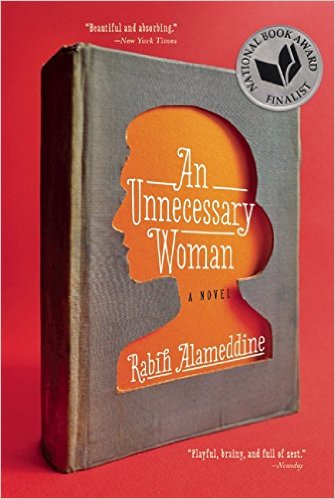
An Unnecessary Woman, by Rabih Alameddine

Summary: Aaliya Sobhi has spent her life set to the side by circumstance and culture, unwanted, unnoticed, and for the most part, unloved. She navigates war-torn Beirut and the loss of almost everything that matters to her with stolid doggedness; her life force comes always through books: selling them, reading them, and translating them. As she approaches the nadir of her life, an unexpected tragedy threatens to take the painstaking translations she's spent her life shaping, and she has to learn a new form of acceptance to save them.     

Why I love it: Aaliya's story could easily be a depressing indictment or veer off into cheesy redemption, but Alameddine manages to make it nuanced, engaging, and relatable. She explores the complexities of Lebanese culture and the disparities of gender while eschewing stereotypes and easy explanations. Aaliya shouldn't be likeable, but she is; she touched the part of me that knows what it's like to be marginalized and is afraid of finding myself alone. The ending is powerful in an understated way, and Aaliya has stayed with me for months.     


Middlesex, by Jeffrey Eugenides

Summary: Middlesex follows the story of Calliope Stephanides, beginning two generations before she's born. Cal is a hermaprodite, her biological reality the fluke result of her Greek grandparents' incestuous marriage; their complicated love story and the consequences of their choices interweave with Cal's discovery of her body and the development of her gender identity. 

Why I love it: As a developmental psychologist and amateur family genealogist, the story of how a family's complicated history culminates in the identity of one modern-day protagonist pulled me in from page one (not a surprise--my first novel, Hazel-Green, is a family saga with similar themes). Eugenides celebrates taboo topics rather than 'deals' with them--he explores without judgement and as a result allows the reader to engage fully with important questions of nature, nurture, and the human spirit. 


And now for something completely different...


Soulless, by Gail Carriger

Summary: Alexia Tarabotti has no soul--and that's a good thing. At least, it is when you live in a world populated by werewolves and vampires, because it means you can neutralize their powers with a touch of your hand. Of course, that ability makes Alexia dangerous to many and useful to others, and within pages she's being hunted by those who want to destroy her and those who want to employ her. Add to that her hidden (even from herself) passionate love for one of the most powerful werewolves around and you have a fun, fast-paced steampunk romp with a fair amount of suggestive situations and even some steamy sex.

Why I love it: Steampunk. Strong female protagonist. Steamy situations. Isn't that enough? Oh, fine--Carriger's writing is also witty, her dialogue engaging, and her world-building strangely believable, given the content revolves around werewolves and vampires. This book is a good time, plain and simple. Grab some tea and biscuits, cuddle up in a cozy throw on the couch, and enjoy the ride.


Etiquette & Espionage, by Gail Carriger

Summary: Sophronia Temminnick is a spirited fourteen-year-old tomboy who doesn't fit the Victorian template for what a young lady should be. When her mother reaches the end of her rope, she sends Sophronia off to a finishing school; but as it turns out, while this school is about 'finishing' young ladies for their introduction to society, it's also about teaching them to 'finish' off anyone who poses a threat to that society. They learn how to dance, and how to use weapons; how to flirt, and how to deceive; how to be beautiful, and how to be lethal.

Why I love it: Steampunk. Strong female protagonist. But-- appropriate for teen readers. Sophronia deals with the politics of young girls and young love (ish) while learning how to climb airships, care for mechanical pets, master martial arts, and faint without wrinkling her frock. I wish I'd had this book when I was a teenager, and I'm not too proud to love it now. The world Carriger builds is full of fun surprises, and Sophronia is an empowered young woman you'll want to spend lots of afternoons with. 


There you have it! Hope you saw something that intrigued you. I'd also love to hear about which books you loved last year--tell me about them in the comments. 

Happy reading!
M.

Monday, October 19, 2015

Review: Write-A-Thon: Write Your Book in 26 Days by Rochelle Melander

Today I’m back with the final NaNoWriMo-related book review I’ll be doing this year; if you missed the first two you can find my review of Fast Fiction by Denise Jaden here, and Book in a Month by Victoria Lynn Schmidt here. Today we’re going to look at Write-A-Thon by Rochelle Melander; this book is a better fit for the ‘pantsers’ or ‘discovery writers’ out there among you. 


If you’re new to NaNoWriMo, you may not yet have heard the terms ‘pantsers’ and ‘plotters’ yet. ‘Plotters’ is fairly intuitive—it refers to people who like to plot at least the basics out before they begin writing. ‘Pantsers’, on the other hand, are people who like to just dive in, or write by the seat of their pants. Another term for this (one I prefer) is ‘discovery writers’, because you’re discovering where your story will go as you write.


So if you’re a just-dive-in kind of person, there’s not really much prep to do, right, and what help can a book be? First of all, wrong. There’s all sorts of prep you can do, but it’s more along the lines of getting past your writing demons and making sure you schedule your life to set yourself up for success during NaNoWriMo. There are also lots of tricks and tips that can help you keep going while you’re writing your book, so you’ll successfully reach the end. These are the kinds of help you’ll find in this book. 


Write-A-Thon has three parts. The first takes you through some training: attitude training, writing training, course training (plotting your book—don’t worry, this is in a very basic, pantser-friendly way), and life training. Each of these will help you find the time, energy and head space to help you succeed when you do sit down to write your book. The writing training session will also introduce you to some basics about writing a book, with the assumption that you’re fairly new to this. 


The second part of the book is designed to be a companion during the writing process; Melander suggests you use it as a ‘writing coach’ of sorts. It’s broken up into 32 vignettes with different tips; you can read them all before you start, read one or more a day to get your mojo flowing, or she suggests you can even just flip at random when you need an extra push and see what you get. If you have an ereader this part is a bit hard, but you can always use a random number generator as a way of flipping through. There’s a lot of good wisdom in these sections, from avoiding ‘monkey mind’ to overcoming perfection, to ways to get past writer’s block. 


The final part, ‘Recovery’, focuses mostly on why you should revise what you’ve written during your write-a-thon, and gives some basic suggestions for beginning that process. It also talks a little bit about editors and queries. 


This book is particularly well-suited for people who’ve never tried to write a book before, and are thinking of getting their toes wet in the NaNoWriMo pool. It’s very user-friendly and terminology-friendly for people who haven’t really thought about doing something like this before, and for whom the thought of plotting or outlining an entire book makes them break out in a cold sweat. It’s also a good resource for people who have tried NaNoWriMo before but had a hard time seeing it through—it gets to the root of a lot of those problems that can derail you. I wish I’d had something like this my first year to use as a daily mojo-stoker. 


Another thing this book has going for it is that it's designed to help writers of all sorts. It has a dedicated section on non-fiction books, and the advice it gives applies to all. Increasing numbers of people are using NaNoWriMo to write books other than novels (even dissertations and short-story collections), and this book is a good resource for all, not just the fiction writers among us. 


So, if you’re a NaNoWriMo newbie, a pantser/discovery writer, or someone who needs a little extra something to help them win this year, go have a look at this book. It might be just the thing to help you get through those 50,000 words, and beyond. 


Happy writing!  
M.

Sunday, October 11, 2015

NaNoWriMo Review: Book in a Month by Victoria Lynn Schmidt

(Purchased by me; affiliate link)


I’m back with my second NaNoWriMo-relevant book review, this time Book in a Month by Victoria Lynn Schmidt. If the thought of 'pantsing' it gives you night terrors and you’re looking for something that can help you write a book with structure, direction, and developed characters all in a month, this may be the book for you. If you like order, exercises and worksheets, this book is definitely for you!


Book in a Month has a clear structure designed to guide you part by part, and even day-by-day, through the construction of your novel. There are two main parts to the book; the first section is designed to help you break through mental barriers you might have, such as problems with resistance and time management. It’s broken down like this:

Introduction
The five secrets of BiaM
Time management
Resistance
Setting and keeping goals
The Book in a Month system (an overview of the rest of the book)

 I personally have watched lots of very well-intentioned writers set out to write their book (both inside and outside of NaNo), only to be side-lined by fears they aren’t even aware they have, and time-management issues that can easily be overcome (that are probably also related to those fears!). In psychological circles, we call these issues self-sabotage and self-fulfilling prophecy, and they’re deadly. This section talks you through common pitfalls and gives you strategies & worksheets to help you deal with those pitfalls. For example, many people allow their fears to manifest in a need for perfection—they’ll go back and rewrite or rework a section over and over trying to make it perfect, and never make any actual progress on the novel. BiaM provides you with a worksheet that allows you to write down everything you need to go back and fix/research/build on later, so you don’t have to obsess about it now. This is a strategy that the successful writers I know use in one form or another to help keep their minds clear and their work moving forward. 


The second part of the book tackles the structure and content of the novel itself, in four sections: 

Week 1: The outline and Act I
Week 2: Act II, part 1
Week 3: Act II, part 2
Week 4: Act III

In each of these sections, Schmidt guides you through structuring your book with daily exercises and worksheets. You start small and build to big during week one; on day one you write a one-sentence summary, and put your raw story ideas into a ‘story idea map’ worksheet that helps you figure out the stakes, how your character and setting fit in, and what your inciting incidents and turning points are. As you progress, you will develop scenes for your ideas, and finally, an outline. You’ll then turn your attention to your characters development and backstory. By the end of week one, you’ll have fleshed-out characters and a basic outline to put them into. And yes, during this time, you write, so you aren’t falling behind on your daily word-count for NaNo. 


During weeks 2-4, you will continued to write as you buttress your story. You’ll fill out that outline with exercises that help you hone your theme, craft excellent cliffhangers and reversals, spice up your story, continue to improve your characters’ motivations and arcs, and identify plot holes.


I love the questions and worksheets in this book; the worksheets aren’t crazy complicated or overwhelming, yet they have power. In fact, I have a manuscript I’ve put on the back burner to so I can get some distance on it; when I’m finished with my current projects, I’m going to pull it out and use all the steps in this book on it. Yes, it’s already written and it doesn’t map on to the typical three-act structure, but I believe the questions this book asks will help me get to the heart of what isn’t quite working right with it. 


So if you’re looking for guidance, especially if plotting is a must for you, check this book out and let me know what you think! I’ll be back next time with another option to help with NaNoWriMo that’s a little more free-flowing. 


Happy prepping!

Wednesday, September 2, 2015

Review: Veronika Layne Has a Nose for News

(Review copy provided for honest review; affiliate links)

Hello! Good to see you again! I’ve been away for a few weeks both finalizing my second novel, now called Deadly Avatar, and jumping deep into the query process. But that’s a post for another time, and I’ll be back with more about that soon.


Today I’m back with a review of the second Veronika Layne book (click here to see my review of the first book), Veronika Layne Has a Nose for News, by Julia Park Tracey. This review won’t contain spoilers for the new book, but will contain a few soft spoilers for the first book, so if you want a virgin reading, go read that book first!


Okay. So. Veronika Layne is an independent, opinionated, environmentally-conscious twenty-something journalist who has recently been merged into a large media conglomerate; in the process she has been knocked down the the bottom of the corporate ladder, relegated to covering the fluffiest of fluff pieces. She wants two things out of life: to report real news, and to bask in the affection of her new boyfriend, Aidan.


Too bad that Aidan is flying off to Columbia University to get a Master’s Degree in journalism, while Veronika is stuck behind in California. Veronika is not the sort of woman to tie her identity to a man, and is horrified to find herself pining over him. She throws herself into her work, and while covering a local city council meeting she stumbles on a celebrity house flipper; he seems to have a disregard for local laws, and Veronika’s nose tells her his motives aren’t pure.


Nose for News is a fun, fast read, with smart writing. Julia Park Tracey explores the agonies of long-distance romance in the age of text messages, IMs, and mysterious Facebook photos with insight, wit, and humor. We can all relate, and want to both smack Veronika (stop checking his FB page obsessively!!) and hug her at the same time, because we know the pain. And while the story would have been an entertaining one just with the mystery and the romantic tension, the book goes a level above by allowing Veronika to grow from what she’s experiencing in a meaningful way. And this time around Veronika gets to work with an intern, Ingrid; Veronika converts her from a designer-label princess to a budding hippie in a funny-bone-tickling subplot.


If you’re looking for a strong female protagonist to spend your evening with, give Veronika a try. Just be prepared for the girlcrush you may develop. Right now the book is free if you have Kindle Unlimited, (so is the first book!) and I believe I've mentioned how much I love free. :)

Happy reading!
M.

Thursday, July 9, 2015

Review: Veronica Layne Gets The Scoop!

(Purchased by me; affiliate links)


Summer is in full swing, which means it's time for beach reads! There's nothing like hanging out on the beach or next to the pool or lolling under an oak tree on a beautiful summer day with plenty of time to read, read, read. And I have a fun read to add to your list: Veronika Layne Gets The Scoop, by Julia Park Tracey, the first installment of the Hot Off The Press series. 


Veronika Layne Gets the Scoop
Veronika Layne is a smart, sassy twenty-something trying to build her career as a journalist on a small San Francisco Bay Area island (modeled after Alameda). She’s doing pretty fine for herself until the paper she works for merges with a larger conglomerate (an all-too familiar situation for many of us), and has to face an unpleasant decision: work on cotton-candy feel-good crap, or quit. She decides to suck it up and pay her dues until she can convince her boss she’s been undervalued. So when she stumbles across what looks like the the desecration of Native American burial mounds, she decides to investigate. Predictably, all does not go well; Veronika struggles with the investigation and her very hot rival co-worker, while the reader reaps the rewards.


Veronika is the sort of female protagonist I love; she’s strong, she’s kind, and she’s flawed in ways that are highly relatable. She can take care of herself, thank you very much, and she can save the planet as she’s doing it (green is her watchword) but she’s simultaneously semi-clueless when it comes to men. I don’t know about you, but that sums up my previous dating life pretty darn well, so I find myself face-palming and wanting to hug her all at the same time. The closest comparison I can come up with is to say that if Stephanie Plum had a younger sister who was a little more tattoed, and a little more savvy, and a little more hippy-dippy, she’d be Veronika Layne.


The author herself was a journalist for many years, and her expertise shows. The book approaches the mystery through the mind of an investigative reporter rather than a detective; this gives it a fresh take and a less predictable trajectory. If you’ve ever watched old movies and wondered what it was like to be one of those guys with the press-pass in their fedora, you’ll enjoy taking this journey in Veronika’s shoes. 


This is Chick Lit, so there is romance threading through it, with some sex. Very sexy sex. And all I have to say about that is: Yum.


So if you’re looking for a fun, fast-paced, witty read to savor on a beautiful summer day, I highly recommend you spend some time hanging out with Veronika. Oh, and? The next book in the series (Veronika Layne Has a Nose for News) is scheduled to come out sometime in the next month, so if you fall in love with her, you won’t have to wait long for a second play date. In the meantime, if you’re an Amazon Prime member, you can read this first installment for free on Kindle Unlimited. I love free, I’m not gonna lie. ;-)


Happy reading,

M. 

Saturday, July 4, 2015

Book review: The Writer's Digest Writing Clinic: Expert Help for Improving Your Work

(Affiliate links)


If you’re a writer, you’re a reviser, and if you’re like me, the revising is the hard part. I can produce rollicking piles of crappy writing in no time flat, but it’s a hard, laborious process to turn it into something anyone would want to read. And since I’ve spent half my life revising academic papers, at times it takes a concerted switch in mindset to edit my fiction. 


One of the best tools I’ve found for this is The Writer’s Digest Writing Clinic: Expert Help for Improving Your Work, by Kelly Nickell. The bad news up-front is this book is out of print; the good news is you can get ‘used’ new copies without too much problem. I originally found this book at my library and loved it so much I bought a copy for myself.


The contents


The book has divisions for fiction, non-fiction, and poetry, and then moves on to helping you get your writing published with divisions on writing queries, synopses, and proposals. Each division has sections that deal with a topic: opening hook, point of view, narrative voice, dialogue, exposition, etc. At the beginning and the end of the book there are sections to help you find writing groups, and to help you navigate critique groups effectively to get what you need and leave the not-so-great parts behind. 


The approach


For each topic, the book has an introductory explanation of the basic issues involved, and then takes a piece of writing and edits it right in front of you—all the marks an editor would make, along with annotations that explain why the changes were made. 


Then, at the end of each topic, there is a ‘your turn’ section that walks you through checking for this issue in your own writing. For example, '(1) Take a look at your first three scenes. Write ‘PI’ next to the points where your main character’s personal intentions become clear. Do the intentions propel the scenes forward and add insight into your character? Are they consistent with your intended storyline? (2) Now chart your character’s journey. Write ‘j’ next to thoughts and actions that are inspired by your character’s personal intentions. Is your character’s journey apparent in each scene? Do the marked points move the scenes forward?

At at the end of each division (fiction, non-fiction, poetry, etc.) is a general editing checklist for quick reference. 


My take-away


I’m a very show-me sort of person; telling me that too much description is slowing the pace of my scene is one thing, but showing me before-and-after examples makes it far more real for me. And when you’ve got annotations along with those changes, well, now we’re talking. Something about getting a look at something through an editor’s eyes helps the information penetrate my thick skull more effectively.  

I think this is an excellent book whether you're new to revising your own stuff or you've been doing it for a long time--I periodically flip through it to refresh my memory. 

If you're looking for other good books to help you with revision, check out my review of Rock Your Revisions by Cathy Yardley here
Happy revising!
M.

Sunday, May 24, 2015

Review: Rock Your Revisions by Cathy Yardley

(Contains affiliate links)

In my recent post about my revision process (you can find it here if you missed it), I mentioned that there were several books that helped me along my fiction revision path (which turned out to be very different from revising my previous non-fiction). I’m going to do a series of reviews on the ones I like, starting with one of my very favorites, Rock Your Revisions: A Simple System for Revising Your Novel, by Cathy Yardley. 


Rock Your Revisions has been a life-saver for me; it helped me stake out an effective approach to my revisions, and then walked me through each portion of them. I’ve come to think of it as a user’s manual for fixing your novel, like the kind of user manual that walks you through repairs to your car. 


Maybe it’s only me, but a manuscript can be intimidating, sitting there all bulky with lots of pages and chapters and paragraphs and sentences—where do you even begin? Page by page, looking for every possible issue as you go? How would that even work? How do you keep track of everything you should be checking for? And what if all you can figure out is that a scene or section isn’t quite working, but you’re not sure how? 


This book helps with all of those issues.


Built into the structure of the book itself is a plan for tackling your revisions and breaking down the nightmarish big-picture into manageable chunks. Because you can’t keep track of everything at once, so don’t even try—instead, do it in stages. The book takes you through a three-pass process of revising your novel one step at a time, and as it walks you through, it helps you diagnose problems you might not be able to recognize. 


The first revision pass takes you through structural revision; this looks at the between-scenes structure of your book, or Yardley refers to as ‘framing your house’. Here you’re going to look at your story structure, your characters and your storytelling devices. Within this section, the book continues to walk you through step-by-step to help break down this revision pass(of course you don’t have to follow it if you don’t want to):  


Pass 1: Structural revision pass
Quick read
Scene Chart
Characters (Story-level)
Plot Points and Story Arc
Characters (scene-level)
Scene flow and escalating conflict
Talking head avoidance devices
Opening Scene
Closing Scene
Creating the first pass plan


The second pass is the scene revision pass; as Yardley puts it, in this section, you’re going to make sure every room in your house has a purpose and is furnished in a manner that serves that purpose. Here you’re going to make sure that each scene is structured well as its own unit (has a goal that you’ve acieved), that everything flows, and that the contents are compelling to your reader (you don’t bore them with too much narrative summary, etc.):


Pass 2: Scene revision pass
Anchoring/setting
POV revisited
Dialogue check
Exposition
Detail


Finally, the third pass is your fine polish pass, where you decorate your rooms, make ‘em nice and pretty for your visitors. Here is where you do the equivalent of line-editing. This pass is represented by a single chapter in the book, broken down into different issues like checking for repetition, checking for typos, and the like. Yardley assumes that you mostly know the drill here—after all, you’ve been doing this sort of revising most of your life--but gives a good reference for more help in this area: Self-Editing for Fiction Writers by Renni Browne and Dave King (which I will be reviewing next time, because I love that book, too). 


In each sub-section throughout the book, Yardley defines the important concepts you need to know, shows you what you’re looking for via examples, and gives you ‘assignments’ at the end to allow you to put the advice into action. Her explanation and examples are clear; some advice books I’ve read will give you 2-3 pages of a book or story to read to illustrate a point, and by the time you read it, you forget what you were looking for. Her examples are concise and user-friendly. 


Most of all, I love this book because it has a flow-chart nature to it; overall, as I’ve already mentioned, but even when it comes to individual issues. For example, in one sub-section about making sure your characters are behaving consistently, she gives a diagnostic tool to apply for each scene in turn (I have paraphrased this somewhat for space reasons; she explains as she goes): 


(1) Identify the POV character in a scene.
(2) Identify the scene’s goal
(3) Check this goal against the overarching Goal-Motivation-Conflict of the POV character.
(4) If there is a mis-match (if the scene’s goal conflicts with the GMC), adjust your scene. 


For me, this syllogistic trouble-shooting approach is perfect. Sure, somethings I can figure out for myself. But sometimes I may know I need X, but I have no idea how to get X. This helps break it down in a way that clicks with my mind. It makes things crystal clear for me, and gives me an action-oriented way to diagnose what's wrong with the scene, and how to solve the problem. 


In my writing life, I have taken the essential approach of Rock Your Revisions and modified it suit my own style. I don’t follow the exact order she suggests, and I have a few other things thrown in that I know I personally need to address when I revise. But this was the book that helped me begin carving out my approach to revision, and I still go back to it when I revise. I think it’s a great place to start if you’re facing your first revision, and an excellent way for more experienced writers to help smooth over their problem areas.     


Do you have any books or other sources you've found helpful for revision? I'd love to hear about them in the comments if so!


Happy revising,
M. 

Sunday, May 10, 2015

Review: A Writer's Guide to Persistence, by Jordan Rosenfeld


Do you ever feel like giving up on your writing? Maybe after a rejection from an agent or magazine you thought was a perfect match for your work? Or after you spent eight hours revising a two-page scene only to realize the next day that your original version is better? Or when you’re staring at a blank screen and the voices in your head are whispering to you that you’re crap? Maybe when you read a masterful piece by another writer and feel like you’ll never be able to achieve that sort of beauty?

Nah, me neither. 

Hahahahaha, YEAH RIGHT. If I had a dollar for every self-doubt I’ve had, I’d be driving a Ferrari down to my weekend yachting excursions. 

It’s not a novel observation that the ability to persist is a key skill in a writer’s bag o’ goodies. But how? How do you keep persisting as you're being pelted relentlessly by the rejections and voices in your head? 


A Writer's Guide to Persistence
Jordan Rosenfeld’s A Writer’s Guide To Persistence tackles this question from the roots on up. It has three parts: ‘Practice’, ‘Polish’, and ‘Persist’. Each of these main divides have several smaller sections, like ‘Push through perfectionism’; in each of these Rosenfeld discusses the issues that hold writers back, and gives concrete suggestions for overcoming them. She also has a ‘Work it’ exercise in each section designed to jump-start you on the topic, and a ‘Move it’ exercise designed to get you physically moving, since breathing and physical activity can help fight off our negativity and boost our production. In some of the sections she also has guest writers share some relevant personal experiences on the topic at hand, in sidebars titled ‘Persistence is personal’. 


In the ‘Practice’ third of the book, Rosenfeld breaks down the fears and the excuses that keep us from an effective writing practice. We’ve all said things like: ‘I would write if only X’,‘I can’t write unless I have Y’, ‘Maybe I just don’t have anything interesting to say’, ‘What if nobody ever reads what I write?’ and so on. She shines the light on all of these and many more, and then helps you build defenses against them. She gives advice for building your own ‘creative support team’, finding the time and space to write, and constructing a plan to reach your goals. 


In ‘Polish’, Rosenfeld helps you defeat the demons that keep your writing from flowing, and your craft from deepening. She helps silence the voices that stop you from writing things that scare you, and encourages you to push your abilities and develop your skills. And she explains why revision isn’t an indication of failure or bad writing, but a necessary part of creating good art.  


With that brave foundation in place, ‘Persistence’ helps with the roadblocks that you will encounter when you’re trying to put your work out into the world. Just got your twentieth rejection on the same piece? She explains how rejection can help you. Did you just spend several weeks volunteering at a conference, but didn’t manage to get even one agent to look at your manuscript in the process? She explains why all that effort was not wasted, even if it seems like it was right now. She helps you tell quality feedback (critique) from harmful feedback (criticism), and know what to act on and what to leave behind. She helps you recognize sabotage, both from yourself and from others, and defend against it. She discusses when and how to submit, how to deal with those inevitable rejections and how to know when to self-publish.   


What makes the book work for me is the insight Rosenfeld has into writers’ fears and self-destructive reactions; for almost every topic in the book, Rosenfeld gave voice to a fear or concern that I’ve had, or that one of my writing friends has had. Every time Rosenfeld mentioned one of my fears, my brain cried ‘Yes! That’s it exactly!’. That insight alone is powerful: so many of us think we’re the only ones to ever have such-and-such fear, and because of that we’re not worthy of membership in the writing club; to see that others share our struggles gives hope and encouragement.  Maybe we’re not so strange after all, and if they can overcome it, so can we. And to that end, she uses her insight to break down the relationship between our fears and our self-destructive behaviors, and provides solutions.  


If you’ve never had the voices of doubt whisper to you, never had internet trolls slam your deeply personal work ‘til you want to crawl into a hole, and never had a stack of rejections make you question whether your dog can write better than you, you probably don’t need this book. But for the rest of us, it’s an excellent source of strength and guidance for the days when we want to put all our writing through the shredder and gorge ourselves on chocolate. 


BTW, Jordan Rosenfeld is having a virtual launch party for the book on Facebook, on May 13. She'll be joined by other authors who will be sharing their best writing tips, and she will be giving away copies of the book! You can check out the event page here


Happy persisting!

M. 


(Disclosure: this website may be compensated for linking to other sites.) 

Sunday, April 19, 2015

Writing a first draft in 30 days? Fast Fiction by Denise Jaden can help.


Writing a first draft in 30 days? I have something that will help you do it effectively: 


Fast Fiction: A Guide to Outlining and Writing a First-Draft Novel in Thirty Days

Fast fiction by denise jaden
I picked up this book just before NaNoWriMo this past November, along with several other books designed to help people who were diving into the NaNoWriMo pool without a life jacket. But, while invaluable for NaNoWriMo purposes, this book isn’t just about plunking yourself down for thirty days and coming up at the end with a draft; it will help you prep and revise, as well. And, it doesn't lie to you and lead you to think you'll have a ready-to-be-published book in that time; as the title itself makes clear, this is about getting you through your first draft, and then working to improve what you have. So this book is an awesome find anytime you're writing a novel, no matter your time frame. 


The book is divided up into three sections. The first, 'Before the Draft', takes you through the process of preparing to write the novel; it covers everything from ideas to setting to characters to point-of-view to themes to the three-act structure. Each topic within the section defines terms, explains key concepts, and gives clear, concise advice on the topic; there are also questions and/or exercises to help you explore each topic as it relates to the specific book you want to write. The section finishes with several action-oriented chapters that take all of the concepts you’ve been exploring in the previous sections and helps you turn them into a list of scenes, along with a story plan. 


There is an immense amount of information in this first section; if you’re a beginning writer, it will introduce you to all of the basics you need to think about when writing your book. If you’re a more experienced writer, it will remind you to think about things you may be glossing over, give you tips for problem areas, or just help you think about things in a new way. One of the things I love about the book is the linked compare/contrast character charts, and her character interview lists; these replaced a bunch of others exercises I've been using but never found fully satisfying.  


Once armed with your characters, your list of scenes, and your story plan, you’re ready for section two, ‘During the draft’. Here you’ll find short daily readings designed to focus your thinking and your writing, along with a daily task. The task is a loose, general prompt designed to tune you in to some aspect of novel-building, and often includes more specific prompts or probes to get you going. The order of the prompts is designed to guide you through the novel gently: week one is 'Launching in', week two is 'A New Direction', week three is 'Deepen the plot' and week four is 'Race to the finish'. 


There is even a ‘cheat sheet’ that reduces the daily prompt exercises down to their bare bones to help guide you through the novel creation process.


This section kept me jazzed and motivated during last NaNoWriMo. It allowed me to keep firm contact with the forest during an event that can easily mire you in the trees. In fact, I bought this book only a few days before NaNoWriMo started, and didn’t have time to use the first section beforehand at all; I started each writing day with the short reading and the prompt, and finished each writing day by reading a little bit from the first section of the book. 


I like that the prompts were general enough in most cases to fit with wherever I found myself on a given day; there were no overly specific prompts like ‘Your main character finds a note in his backpack—write!’. What I mean by this is, most of the prompts can be used at any point in your novel-writing; for example, a prompt that reminds you to be aware of genre expectations is a good one to have in the back of your mind on any given day, no matter if you’re writing the beginning, middle, or end of your book. 


The final section, 'After the Draft', is short, and gives you some basic advice (along with suggested resources) for revising your novel. The first piece of advice is to put the novel (and the book!) aside for at least two weeks, and come back with fresh eyes; when you return, the book discusses several important issues to keep in mind while doing your read-through and revision.


When a single book covers most of the major elements of writing a novel AND gives you a targeted lesson for each of thirty days, there is a limit to how in-depth the information can be. Entire books have been written, for example, about developing characters, or how to use the three-act structure. But despite the limited space available for each, Jaden gives thoughtful, effective treatment to each. There is more than enough information to get the most novice writer prepped and ready to hit the ground running. 


In my last post I mentioned I’m neither a pure plotter or a pure pantser. I also don't write my novels in order. So how does a book like this work for me? I didn't find the book restrictive in any respect; it's not the sort of book that's going to make you write your first page on day one and your last page on day 30; I was all over the place while reading it during NaNoWriMo. I’ve also been reading it as I revise MMORPG; it reminds me of all the elements I need to be sure are in place as I’m doing my revision passes, and helps me deal with the bumps I find there. In one example, during my second read-through I realized I need to add two more witness characters, and I need them to be distinct from those I already have. The sections on character development and the compare-contrast charts have been very helpful as I work those parameters out.   


So, who is this book for? I think it's useful for anyone doing NaNoWriMo, anyone writing their first novel, and anyone who ever finds themselves banging their head on their keyboard wishing someone would just write a darn manual on how to write a book already. If any of these are you, Fast Fiction is worth a look, whether you’re hoping to write your book in thirty days or thirty weeks.

Happy writing!
M. 


Sunday, April 5, 2015

Three excellent writing advice books


Like most writers, I’ve been writing in one form or another since I was able to form letters.  And even when my academic career demanded mostly non-fiction articles and books, I still found an outlet for the more creative, fun side of my writing. But when I set out to write my first novel, I felt strangely unprepared. And when I decided I wanted to publish said novel and make a career of my fiction writing, I felt adrift in a sea of cluelessness. 

And whenever I feel like I don’t know enough about something, I turn to books. Go figure.

So as I was stealing my snippets of time here and there to write my novel, I also started stealing snippets of time to read advice books about writing. I have many favorites for different subjects within the writing-advice genre, but three stand out in my mind because they did so much to encourage me and ease me onto the path.


Stephen King’s On Writing


On Writing, By Stephen King
On Writing: A Memoir Of The Craft This one is no surprise, everyone raves about it. But there’s a reason for that—it’s down-to-earth and incredibly useful. The first half of the book focuses more on his autobiography, the second more on what you’d think of as writing advice.

I found almost as much that was useful in the autobiography material as the rest. It’s easy to think of famous, prolific writers as these untouchable wizard-like beings who birth their creations by sneezing them out. And of course you can never live up to that, so why bother? So to read about the very real struggles of someone who has attained the mega-success that Stephen King has is food for the writer’s soul. All of those manuscripts written and copiously rejected, the manuscript for Carrie tossed into the garbage can—if these things happened to him, they don’t spell the end of the world when they happen to us.

But don’t get me wrong—the writing advice is beyond valuable as well. When I stared writing my novels, I had no idea what sort of process was going to work for me; writing research articles and books, even short stories, is very different from writing a novel. Luckily, I’m a big proponent of asking successful people how they accomplished what they did, and then trying what they say to do—so that’s what I did with this book. Stephen King says set your first draft aside for six weeks, and work on another project? Okay, I’ll try it. So I put the draft up on a shelf, and started playing around with an idea I had for another book. Six weeks later I had the needed distance to begin revising Book One, and I also had a completed draft of a second book. HOLY CRAP. It worked. And so began a cycle of revising and writing that keeps me productive in an effective way.

So much else has stayed with me in the same way. Advice on when and how to get feedback from others, when and how to revise, the importance of a writing routine, and so much more. Whether you’re just starting on a serious writing career or have several books under your belt, you’ll find that interesting and useful information abounds between these covers.


Anne Lamott’s Bird By Bird


Bird By Bird, Anne Lamott
This is another blended book, part autobiography, part writing advice. Lamott weaves her life and her advice together to varying degrees throughout the book. Sometimes she gives the advice straight-up, no chaser, like in her discussion of the basic formula for drama, and how to keep  your characters moving forward. Sometimes it’s given lyrically, embedded in life’s wisdom. The best example is the anecdote that gives the book its name. Her older brother had put off a report on birds for months, and was scrambling to get it done for school the next day. Beyond frustrated, he broke down because he had no idea how to get it all done. Their father gave him this advice: “Just take it bird by bird”. This approach has never failed me, in my writing life and out of it. If I look at everything that needs to be done, I want to curl up in a ball and suck my thumb. But if I break off just one piece and work on it…And then work on another piece…It gets done. Today this scene. Tomorrow that one. Before I know it, I have a book.

Simple. Beautiful. Powerful. Just like this book.

Another aspect I find continually valuable about Lamott’s book is the exploration of the writer’s life, the struggles and insecurities. When my self-doubt rears its pernicious head and I’m sure I can’t possibly write anything anyone would ever want to read, her honesty and insight never fail to make me feel ‘normal’. Not ‘normal’ as in the real world (that will never happen!) but ‘normal’ in the writing world. All writers have these issues; it doesn’t mean I’m talent-free and doomed to failure. And that helps me to pick myself up and move forward.


Lawrence Block’s Write For Your Life


Write For Your Life, Lawrence Block
Block has several writing books, most of which are compiled from his past writing-advice columns in Writer’s Digest. I recommend them all—they all give excellent insight over a variety of topics in a fun, engaging way. But Write For Your Life is my favorite for beginning writers, because it deals with the psychological stumbling blocks that beginning writers face (and that return periodically to plague experienced writers). Back in the day, Block used to lead a very successful writing seminar, and decided to write a book based on it. As much as possible, he made this book a written version of what is was like to actually be in the seminar, including meditations, affirmations, and exercises.

Yep, you heard me, meditations and affirmations—that was a revelation to me, too.

A major goal of the book is to get you past the fears that are holding you back and blocking your creativity. Turns out, simply naming your fears and writing them down can help you put them to bed, or at least make them take a little nap. And of course, there's much more dealing with those nasty little imps.

Meditation is an excellent way to allow your mind to disengage from other things, and engage with the writing you want it to do—a tool I’ve found very useful when I need to do my daily writing but my mind doesn’t want to cooperate. This book walks you through how to use a five-minute meditation to turn a potentially wasted day into a productive one.

If that sounds a bit too new-agey for you, don’t worry. There is certainly a new-age feel to much of the stuff. I thought so too at first, but luckily I have that whole try-what-successful-people-do thing going on, so I gave it a shot.  And you know what? It works. Don’t let some silly preconception stop you from getting the benefits. Maybe not every exercise will work for you, but something will, and it will be well worth the cost. :)

So there you have my three favorite writing books for beginning writers! They'll also likely be useful for more experienced writers, too. I have many more favorites in various content areas, and I’ll be reviewing them here as well. But as Julie Andrews sang, the beginning is a very good place to start.

Do you have any favorite writing books?

Happy Writing!
M